*Important Note : Fees are subject to Singapore's prevailing Goods and Services Tax (GST).
1750896000000
60

Cloud & Infrastructure
Cybersecurity & Risk Management
Artificial Intelligence & Automation
Data Analytics & Data Science
Digital Skills & Office Productivity
Project Management & Agile
Software Development & IT Ops
Critical Core Skills
Maritime
Cloud & Infrastructure
Cybersecurity & Risk Management
Artificial Intelligence & Automation
Data Analytics & Data Science
Digital Skills & Office Productivity
Project Management & Agile
Software Development & IT Ops
Critical Core Skills
Maritime
 IT Service Management
Enrol now and save $0 on your course fee
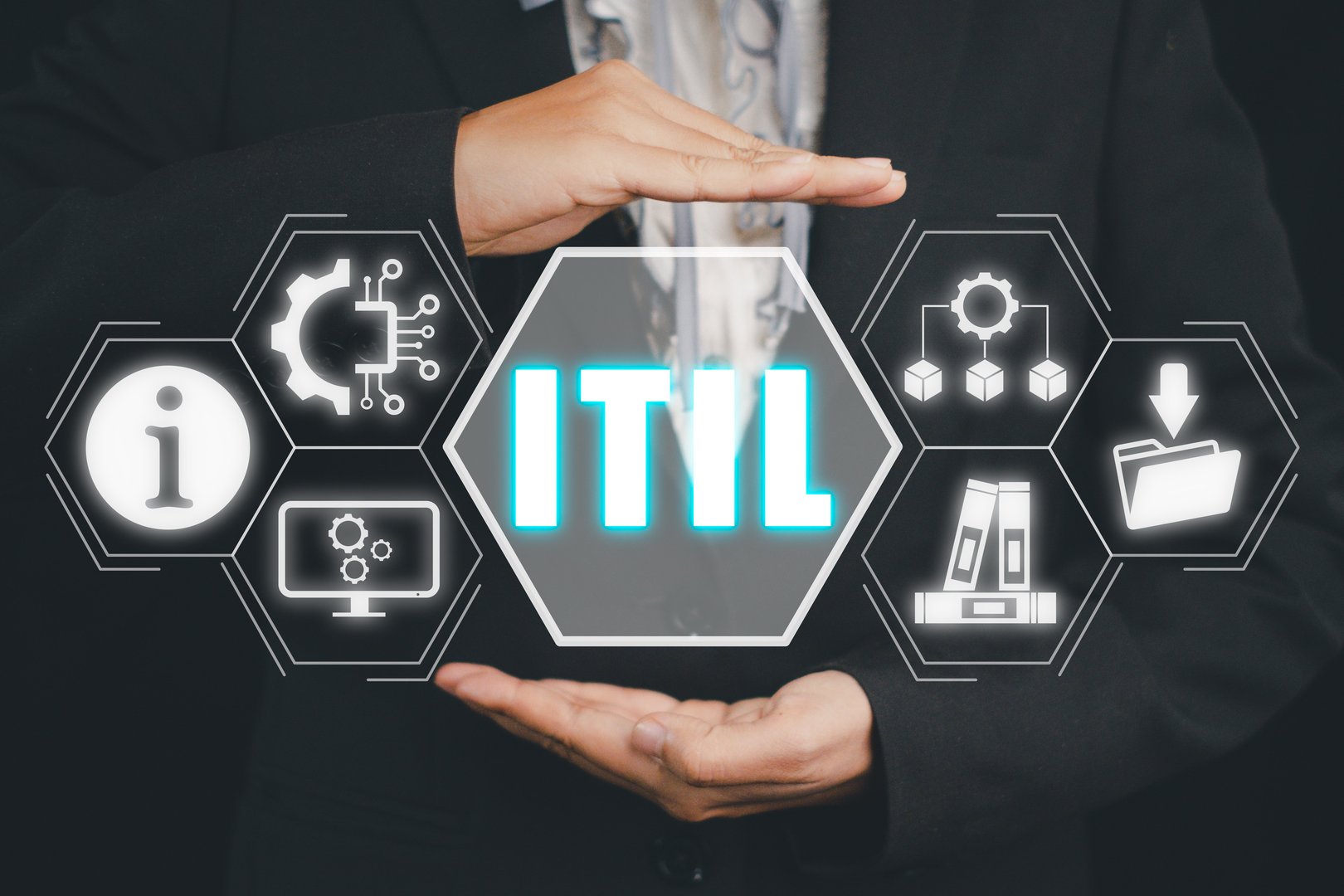
ITIL® Version 5 is here.
Designed for AI-driven, digital-first organisations ready to align strategy, product and service delivery.
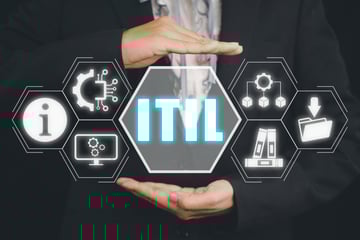
The ITIL (Version 5) Foundation course is an introduction to the essential principles, concepts, and best practices of IT Service Management (ITSM) following the latest ITIL framework (revised in early 2026). It offers participants a thorough understanding of how we can leverage on ITIL to optimise IT service delivery, ensure alignment between IT services and business objectives, and support organisational transformation efforts. The course is suitable for IT professionals, managers, engineers, and anyone interested in gaining a foundational knowledge of ITSM. On completion of the course, candidates qualify to sit for the ITIL 5 Foundation certification exam.
Learning Outcomes:
Understand ITIL service management principles
Describe the ITIL service value system and chain
Identify key concepts and definitions in ITIL
Apply ITIL practices in service operations
Evaluate how ITIL supports value co-creation
Key Topics:
Key concepts of digital product, service management, and service relationships
ITIL Value System (ITIL VS), Governance, and the ITIL Guiding Principles
Value chain and ITIL management practices, value stream mapping and management
Continual improvement and Four Dimensions of Product and Service Management
ITIL integration with other frameworks
Exam Details
This course is designed to build participants’ understanding of key concepts and domains covered in the ITIL® Foundation (Version 5) certification.
The course includes a Boot Camp session on the final day to support exam readiness. This session features practice exam papers, additional guided questions, case studies, group exercises, and study tips.
Participants are required to pay for the official certification exam before the start of the course. The exam is delivered online via a PeopleCert Online Proctored Examination platform.
| Exam duration | 60 minutes |
| Number of questions | 40 |
| Question format | Multiple choice |
| Pass mark | 65% |
| Open book | No |
| Delivery format | Webcam-proctored online exam |
To maximise success, participants are strongly encouraged to complement the course with additional self-study, revision of course materials, and dedicated practice before attempting the exam.
FUNDING INFORMATION
SkillsFuture Singapore (SSG)
Funding is available on Course Fee. Please see below for the eligibility categories available.
| Self-sponsored | Singapore Citizen & PR aged ≥ 21 years | Up to 50% funding |
| Singapore Citizen aged ≥ 40 years | Up to 70% funding | |
| Company Sponsored (Non-SME) | Singapore Citizen & PR aged ≥ 21 years | Up to 50% funding |
| Singapore Citizen aged ≥ 40 years | Up to 70% funding | |
| Company Sponsored (SME) | Singapore Citizen & PR aged ≥ 21 years | Up to 70% funding |
| Singapore Citizen aged ≥ 40 years | Up to 70% funding |
SSG Funding Requirements
Appeal Policy and Procedure
Cancellation, Postponement and Refund Policy
Feedback Policy and Procedure
ITIL® is a registered trademark of the PeopleCert group. Used under licence from PeopleCert. All rights reserved.
Introduction
Key concepts of digital product and service management and service relationships
ITIL Value System (VS)
Four Dimensions of Product and Service Management
Funding available
Course fee funding
Pay or claim with
We’re here to help — reach out anytime.
By submitting this form, you consent to be contacted via email and/or your mobile number regarding your enquiry. You consent to the collection, use, disclosure and processing of your personal data in accordance with our Personal Data Policy.





.png?width=50&name=Artificial%20Intelligence%20(AI).png)


/AdobeStock_230441943.jpeg?width=360&name=AdobeStock_230441943.jpeg)

/AdobeStock_737314510.jpeg?width=360&name=AdobeStock_737314510.jpeg)






/AI%20(5)-1.png?width=360&name=AI%20(5)-1.png)







































































-1.png?width=360&name=Server%20(4)-1.png)






/AI%20(6)-1-1.png?width=360&name=AI%20(6)-1-1.png)
/AI%20(8)-1.png?width=360&name=AI%20(8)-1.png)
-1.png?width=360&name=Automation%20RPA%20(2)-1.png)




















































![VMware vRealize Operations: Install, Configure, Manage [V8.6]](https://www.eservtraininghub.com/hs-fs/hubfs/331_result.jpg?width=360&name=331_result.jpg)
![VMware vRealize Automation - Install, Configure, Manage [V8.3]](https://www.eservtraininghub.com/hs-fs/hubfs/AI-Generated%20Media/Images/Automation%20system%20deploying%20infrastructure%20in%20realtime%20with%20robotic%20arms%20and%20config%20lines%20building%20digital%20components%20Blue%20enterprise%20tech%20setting.jpeg?width=360&name=Automation%20system%20deploying%20infrastructure%20in%20realtime%20with%20robotic%20arms%20and%20config%20lines%20building%20digital%20components%20Blue%20enterprise%20tech%20setting.jpeg)
















































![VMware vSphere: Install, Configure, Manage [V8]](https://www.eservtraininghub.com/hs-fs/hubfs/756_result.jpg?width=360&name=756_result.jpg)









![VMware NSX: Install, Configure, Manage [V4.0]](https://www.eservtraininghub.com/hs-fs/hubfs/812_result.jpg?width=360&name=812_result.jpg)