*Important Note : Fees are subject to Singapore's prevailing Goods and Services Tax (GST).
1752192000000
60

Cloud & Infrastructure
Cybersecurity & Risk Management
Artificial Intelligence & Automation
Data Analytics & Data Science
Digital Skills & Office Productivity
Project Management & Agile
Software Development & IT Ops
Critical Core Skills
Maritime
Cloud & Infrastructure
Cybersecurity & Risk Management
Artificial Intelligence & Automation
Data Analytics & Data Science
Digital Skills & Office Productivity
Project Management & Agile
Software Development & IT Ops
Critical Core Skills
Maritime
 Cloud Computing

Enrol now and save $0 on your course fee
Designing reliable cloud solutions requires more than infrastructure knowledge—it demands systems thinking, performance trade-offs, and cost-aware decision-making. This course equips participants with design tools and architectural patterns to build scalable and secure systems on Google Cloud. Through lectures and labs, they will address networking, storage, security, and resilience in cloud design.
Learning Outcomes:
Define and measure application requirements using KPIs, SLOs, and SLIs.
Architect secure, resilient, and scalable cloud-native applications.
Apply design principles to networking, storage, and compute layers.
Plan for availability, disaster recovery, and cost optimisation.
Key Topics:
Application decomposition and service-level objectives
Microservices, storage planning, and hybrid networking
Resiliency strategies, fault tolerance, and business continuity
Security architecture, encryption, and access management
Capacity planning, monitoring, and incident response
Module 1: Defining the Service
Module 2: Business-logic layer design
Module 3: Data layer design
Module 4: Network layer design
Module 5: Design for resiliency, scalability, and disaster recovery
Module 6: Design for security
Module 7: Capacity planning and cost optimization
Module 8: Deployment, monitoring and alerting, and incident response
We’re here to help — reach out anytime.
By submitting this form, you consent to be contacted via email and/or your mobile number regarding your enquiry. You consent to the collection, use, disclosure and processing of your personal data in accordance with our Personal Data Policy.




.png?width=50&name=Artificial%20Intelligence%20(AI).png)


/AdobeStock_230441943.jpeg?width=360&name=AdobeStock_230441943.jpeg)

/AdobeStock_737314510.jpeg?width=360&name=AdobeStock_737314510.jpeg)






/AI%20(5)-1.png?width=360&name=AI%20(5)-1.png)





































































-1.png?width=360&name=Server%20(4)-1.png)





/AI%20(6)-1-1.png?width=360&name=AI%20(6)-1-1.png)
/AI%20(8)-1.png?width=360&name=AI%20(8)-1.png)
-1.png?width=360&name=Automation%20RPA%20(2)-1.png)
















































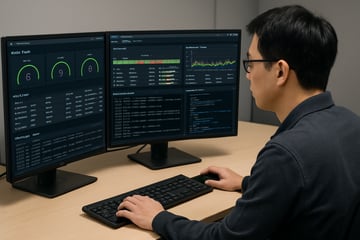




![VMware vRealize Operations: Install, Configure, Manage [V8.6]](https://www.eservtraininghub.com/hs-fs/hubfs/331_result.jpg?width=360&name=331_result.jpg)
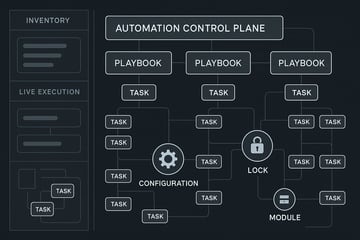
![VMware vRealize Automation - Install, Configure, Manage [V8.3]](https://www.eservtraininghub.com/hs-fs/hubfs/AI-Generated%20Media/Images/Automation%20system%20deploying%20infrastructure%20in%20realtime%20with%20robotic%20arms%20and%20config%20lines%20building%20digital%20components%20Blue%20enterprise%20tech%20setting.jpeg?width=360&name=Automation%20system%20deploying%20infrastructure%20in%20realtime%20with%20robotic%20arms%20and%20config%20lines%20building%20digital%20components%20Blue%20enterprise%20tech%20setting.jpeg)














































![VMware vSphere: Install, Configure, Manage [V8]](https://www.eservtraininghub.com/hs-fs/hubfs/756_result.jpg?width=360&name=756_result.jpg)







![VMware NSX: Install, Configure, Manage [V4.0]](https://www.eservtraininghub.com/hs-fs/hubfs/812_result.jpg?width=360&name=812_result.jpg)