*Important Note : Fees are subject to Singapore's prevailing Goods and Services Tax (GST).
1752451200000
60

Cloud & Infrastructure
Cybersecurity & Risk Management
Artificial Intelligence & Automation
Data Analytics & Data Science
Digital Skills & Office Productivity
Project Management & Agile
Software Development & IT Ops
Critical Core Skills
Maritime
Cloud & Infrastructure
Cybersecurity & Risk Management
Artificial Intelligence & Automation
Data Analytics & Data Science
Digital Skills & Office Productivity
Project Management & Agile
Software Development & IT Ops
Critical Core Skills
Maritime
 Server
Enrol now and save $0 on your course fee
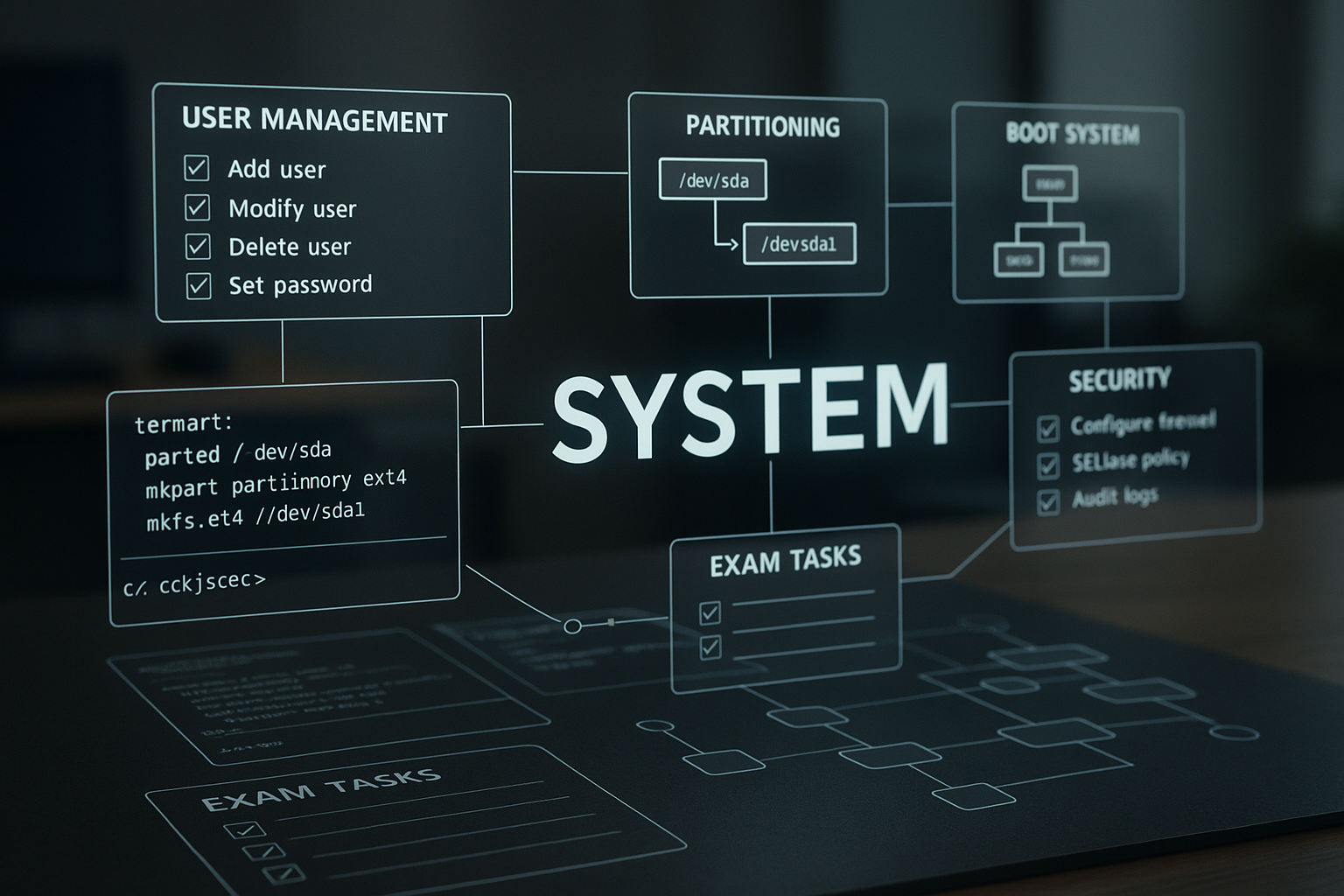
RH124 is the first step towards becoming a proficient Linux system administrator using Red Hat Enterprise Linux (RHEL). Participants will learn essential command-line skills, file system management, and user access control through guided classroom learning and practical exercises.
Learning Outcomes:
Navigate the RHEL environment using essential command-line tools
Manage files, directories, users, and access permissions
Configure basic system settings and manage processes
Install software packages and monitor system performance
Apply basic troubleshooting and system documentation techniques
Key Topics:
Linux terminal, shell commands, and file hierarchy
User, group, and permission management
Package installation with yum and system updates
Process control, system services, and logs
RHEL administration tools and best practices
Get started with Red Hat Enterprise Linux
Describe and define open source, Linux distributions, and Red Hat Enterprise Linux.
Access the command line
Log into a Linux system and run simple commands using the shell.
Manage files from the command line
Copy, move, create, delete, and organize files while working from the bash shell.
Get help in Red Hat Enterprise Linux
Resolve problems by using local help systems.
Create, view, and edit text files
Manage text files from command output or in a text editor.
Manage local users and groups
Create, manage, and delete local users and groups, as well as administer local password policies.
Control access to files
Set Linux file system permissions on files and interpret the security effects of different permission settings.
Monitor and manage Linux processes
Evaluate and control processes running on a Red Hat Enterprise Linux system.
Control services and daemons
Control and monitor network services and system daemons using systemd.
Configure and secure SSH
Configure secure command line service on remote systems, using OpenSSH.
Analyze and store logs
Locate and accurately interpret logs of system events for troubleshooting purposes.
Manage networking
Configure network interfaces and settings on Red Hat Enterprise Linux servers.
Archive and transfer files
Archive and copy files from one system to another.
Install and update software packages
Download, install, update, and manage software packages from Red Hat and DNF package repositories.
Access Linux files systems
Access, inspect, and use existing file systems on storage attached to a Linux server.
Analyze servers and get support
Investigate and resolve issues in the web-based management interface, getting support from Red Hat to help solve problems.
Comprehensive review
Review the content covered in this course by completing hands-on exercises.
We’re here to help — reach out anytime.
By submitting this form, you consent to be contacted via email and/or your mobile number regarding your enquiry. You consent to the collection, use, disclosure and processing of your personal data in accordance with our Personal Data Policy.




.png?width=50&name=Artificial%20Intelligence%20(AI).png)


/AdobeStock_230441943.jpeg?width=360&name=AdobeStock_230441943.jpeg)

/AdobeStock_737314510.jpeg?width=360&name=AdobeStock_737314510.jpeg)






/AI%20(5)-1.png?width=360&name=AI%20(5)-1.png)





































































-1.png?width=360&name=Server%20(4)-1.png)





/AI%20(6)-1-1.png?width=360&name=AI%20(6)-1-1.png)
/AI%20(8)-1.png?width=360&name=AI%20(8)-1.png)
-1.png?width=360&name=Automation%20RPA%20(2)-1.png)




















































![VMware vRealize Operations: Install, Configure, Manage [V8.6]](https://www.eservtraininghub.com/hs-fs/hubfs/331_result.jpg?width=360&name=331_result.jpg)
![VMware vRealize Automation - Install, Configure, Manage [V8.3]](https://www.eservtraininghub.com/hs-fs/hubfs/AI-Generated%20Media/Images/Automation%20system%20deploying%20infrastructure%20in%20realtime%20with%20robotic%20arms%20and%20config%20lines%20building%20digital%20components%20Blue%20enterprise%20tech%20setting.jpeg?width=360&name=Automation%20system%20deploying%20infrastructure%20in%20realtime%20with%20robotic%20arms%20and%20config%20lines%20building%20digital%20components%20Blue%20enterprise%20tech%20setting.jpeg)















































![VMware vSphere: Install, Configure, Manage [V8]](https://www.eservtraininghub.com/hs-fs/hubfs/756_result.jpg?width=360&name=756_result.jpg)









![VMware NSX: Install, Configure, Manage [V4.0]](https://www.eservtraininghub.com/hs-fs/hubfs/812_result.jpg?width=360&name=812_result.jpg)