*Important Note : Fees are subject to Singapore's prevailing Goods and Services Tax (GST).
1752192000000
60

Cloud & Infrastructure
Cybersecurity & Risk Management
Artificial Intelligence & Automation
Data Analytics & Data Science
Digital Skills & Office Productivity
Project Management & Agile
Software Development & IT Ops
Critical Core Skills
Maritime
Cloud & Infrastructure
Cybersecurity & Risk Management
Artificial Intelligence & Automation
Data Analytics & Data Science
Digital Skills & Office Productivity
Project Management & Agile
Software Development & IT Ops
Critical Core Skills
Maritime
 Cybersecurity
Enrol now and save $0 on your course fee
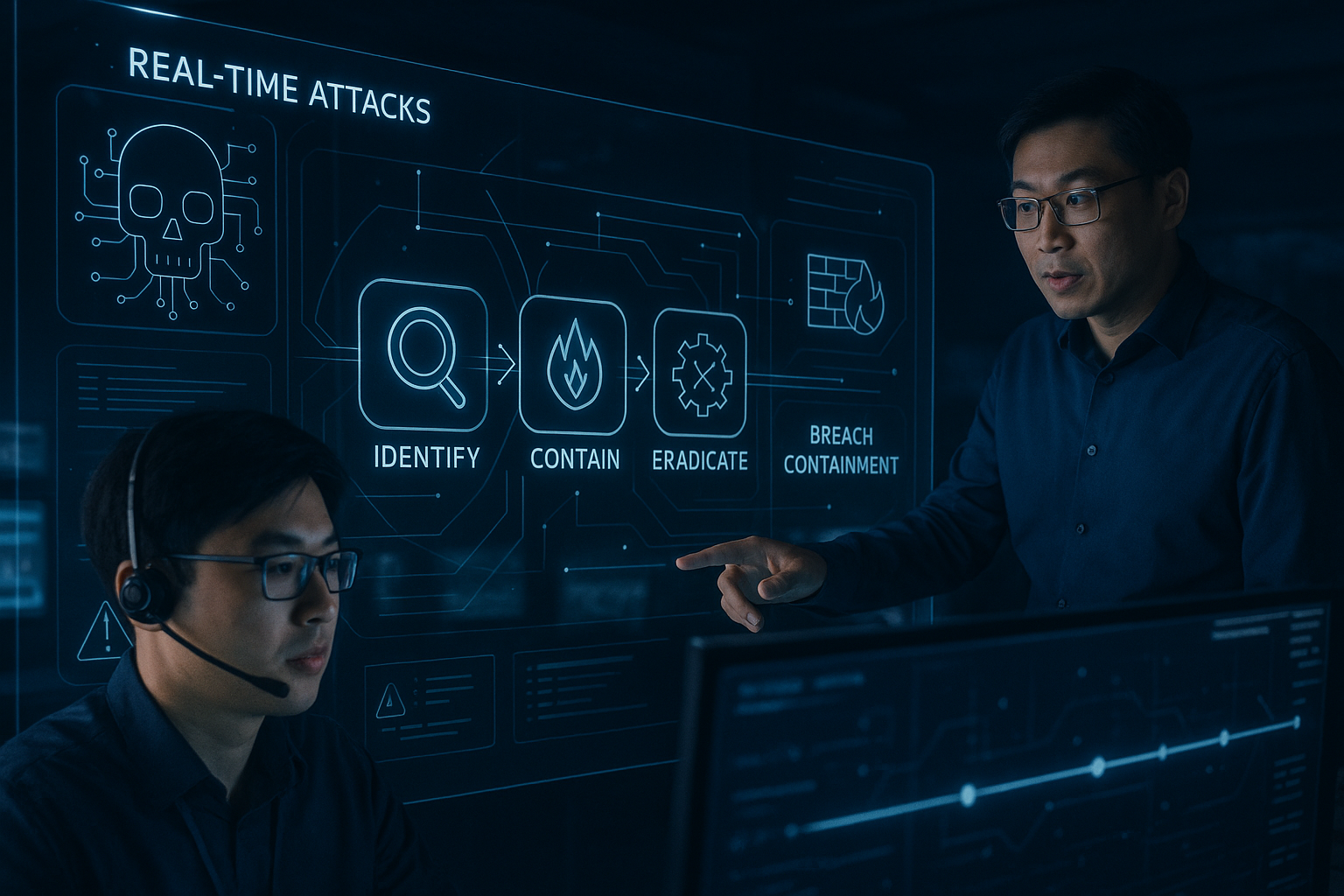
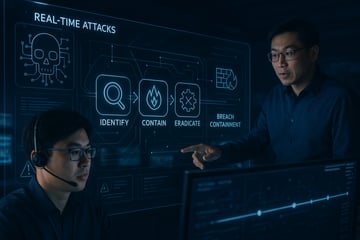
When cyber incidents occur, swift and structured response is critical. This course empowers participants with the frameworks and skills required to handle and respond to incidents effectively. They will work through simulated attack scenarios to strengthen readiness in identifying, containing, and recovering from breaches.
Learning Outcomes:
Understand incident response lifecycle and frameworks
Identify and triage various types of cyber incidents
Apply containment, eradication, and recovery strategies
Analyse root causes and generate incident reports
Implement policies and procedures to enhance readiness
Key Topics:
Incident handling process and risk management
Malware handling and system compromise analysis
Insider threats, denial of service, and data breaches
Incident recovery and post-incident activities
Legal, regulatory, and compliance considerations
MODULE 01: INTRODUCTION TO INCIDENT HANDLING AND RESPONSE
• Understand Information Security Threats and Attack Vectors
• Explain Various Attack and Defense Frameworks
• Understand Information Security Concepts
• Understand Information Security Incidents
• Understand the Incident Management Process
• Understand Incident Response Automation and Orchestration
• Describe Various Incident Handling and Response Best Practices
• Explain Various Standards Related to Incident Handling and Response
• Explain Various Cybersecurity Frameworks
• Understand Incident Handling Laws and Legal Compliance
MODULE 02: INCIDENT HANDLING AND RESPONSE PROCESS
• Understand Incident Handling and Response (IH&R) Process
• Explain Preparation Steps for Incident Handling and Response
• Understand Incident Recording and Assignment
• Understand Incident Triage
• Explain the Process of Notification
• Understand the Process of Containment
• Describe Evidence Gathering and Forensics Analysis
• Explain the Process of Eradication
• Understand the Process of Recovery
• Describe Various Post-Incident Activities
• Explain the Importance of Information Sharing Activities
MODULE 03: FIRST RESPONSE
• Explain the Concept of First Response
• Understand the Process of Securing and Documenting the Crime Scene
• Understand the Process of Collecting Evidence at the Crime Scene
• Explain the Process for Preserving, Packaging, and Transporting Evidence
MODULE 04: HANDLING AND RESPONDING TO MALWARE INCIDENTS
• Understand the Handling of Malware Incidents
• Explain Preparation for Handling Malware Incidents
• Understand Detection of Malware Incidents
• Explain Containment of Malware Incidents
• Describe How to Perform Malware Analysis
• Understand Eradication of Malware Incidents
• Explain Recovery after Malware Incidents
• Understand the Handling of Malware Incidents - Case Study
• Describe Best Practices against Malware Incidents
MODULE 05: HANDLING AND RESPONDING TO EMAIL SECURITY INCIDENTS
• Understand Email Security Incidents
• Explain Preparation Steps for Handling Email Security Incidents
• Understand Detection and Containment of Email Security Incidents
• Understand Analysis of Email Security Incidents
• Explain Eradication of Email Security Incidents
• Understand the Process of Recovery after Email Security Incidents
• Understand the Handling of Email Security Incidents - Case Study
• Explain Best Practices against Email Security Incidents
MODULE 06: HANDLING AND RESPONDING TO NETWORK SECURITY INCIDENTS
• Understand the Handling of Network Security Incidents
• Prepare to Handle Network Security Incidents
• Understand Detection and Validation of Network Security Incidents
• Understand the Handling of Unauthorized Access Incidents
• Understand the Handling of Inappropriate Usage Incidents
• Understand the Handling of Denial-of-Service Incidents
• Understand the Handling of Wireless Network Security Incidents
• Understand the Handling of Network Security Incidents - Case Study
• Describe Best Practices against Network Security Incidents
MODULE 07: HANDLING AND RESPONDING TO WEB APPLICATION SECURITY INCIDENTS
• Understand the Handling of Web Application Incidents
• Explain Preparation for Handling Web Application Security Incidents
• Understand Detection and Containment of Web Application Security Incidents
• Explain Analysis of Web Application Security Incidents
• Understand Eradication of Web Application Security Incidents
• Explain Recovery after Web Application Security Incidents
• Understand the Handling of Web Application Security Incidents - Case Study
• Describe Best Practices for Securing Web Applications
MODULE 08: HANDLING AND RESPONDING TO CLOUD SECURITY INCIDENTS
• Understand the Handling of Cloud Security Incidents
• Explain Various Steps Involved in Handling Cloud Security Incidents
• Understand How to Handle Azure Security Incidents
• Understand How to Handle AWS Security Incidents
• Understand How to Handle Google Cloud Security Incidents
• Understand the Handling of Cloud Security Incidents - Case Study
• Explain Best Practices against Cloud Security Incidents
MODULE 09: HANDLING AND RESPONDING TO INSIDER THREATS
• Understand the Handling of Insider Threats
• Explain Preparation Steps for Handling Insider Threats
• Understand Detection and Containment of Insider Threats
• Explain Analysis of Insider Threats
• Understand Eradication of Insider Threats
• Understand the Process of Recovery after Insider Attacks
• Understand the Handling of Insider Threats - Case Study
• Describe Best Practices against Insider Threats
MODULE 10: HANDLING AND RESPONDING TO ENDPOINT SECURITY INCIDENTS
• Understand the Handling of Endpoint Security Incidents
• Explain the Handling of Mobile-based Security Incidents
• Explain the Handling of IoT-based Security Incidents
• Explain the Handling of OT-based Security Incidents
• Understand the Handling of Endpoint Security Incidents - Case Study
We’re here to help — reach out anytime.
By submitting this form, you consent to be contacted via email and/or your mobile number regarding your enquiry. You consent to the collection, use, disclosure and processing of your personal data in accordance with our Personal Data Policy.




.png?width=50&name=Artificial%20Intelligence%20(AI).png)


/AdobeStock_230441943.jpeg?width=360&name=AdobeStock_230441943.jpeg)

/AdobeStock_737314510.jpeg?width=360&name=AdobeStock_737314510.jpeg)






/AI%20(5)-1.png?width=360&name=AI%20(5)-1.png)


































































-1.png?width=360&name=Server%20(4)-1.png)





/AI%20(6)-1-1.png?width=360&name=AI%20(6)-1-1.png)
/AI%20(8)-1.png?width=360&name=AI%20(8)-1.png)
-1.png?width=360&name=Automation%20RPA%20(2)-1.png)

















































![VMware vRealize Operations: Install, Configure, Manage [V8.6]](https://www.eservtraininghub.com/hs-fs/hubfs/331_result.jpg?width=360&name=331_result.jpg)
![VMware vRealize Automation - Install, Configure, Manage [V8.3]](https://www.eservtraininghub.com/hs-fs/hubfs/AI-Generated%20Media/Images/Automation%20system%20deploying%20infrastructure%20in%20realtime%20with%20robotic%20arms%20and%20config%20lines%20building%20digital%20components%20Blue%20enterprise%20tech%20setting.jpeg?width=360&name=Automation%20system%20deploying%20infrastructure%20in%20realtime%20with%20robotic%20arms%20and%20config%20lines%20building%20digital%20components%20Blue%20enterprise%20tech%20setting.jpeg)










































![VMware vSphere: Install, Configure, Manage [V8]](https://www.eservtraininghub.com/hs-fs/hubfs/756_result.jpg?width=360&name=756_result.jpg)









![VMware NSX: Install, Configure, Manage [V4.0]](https://www.eservtraininghub.com/hs-fs/hubfs/812_result.jpg?width=360&name=812_result.jpg)